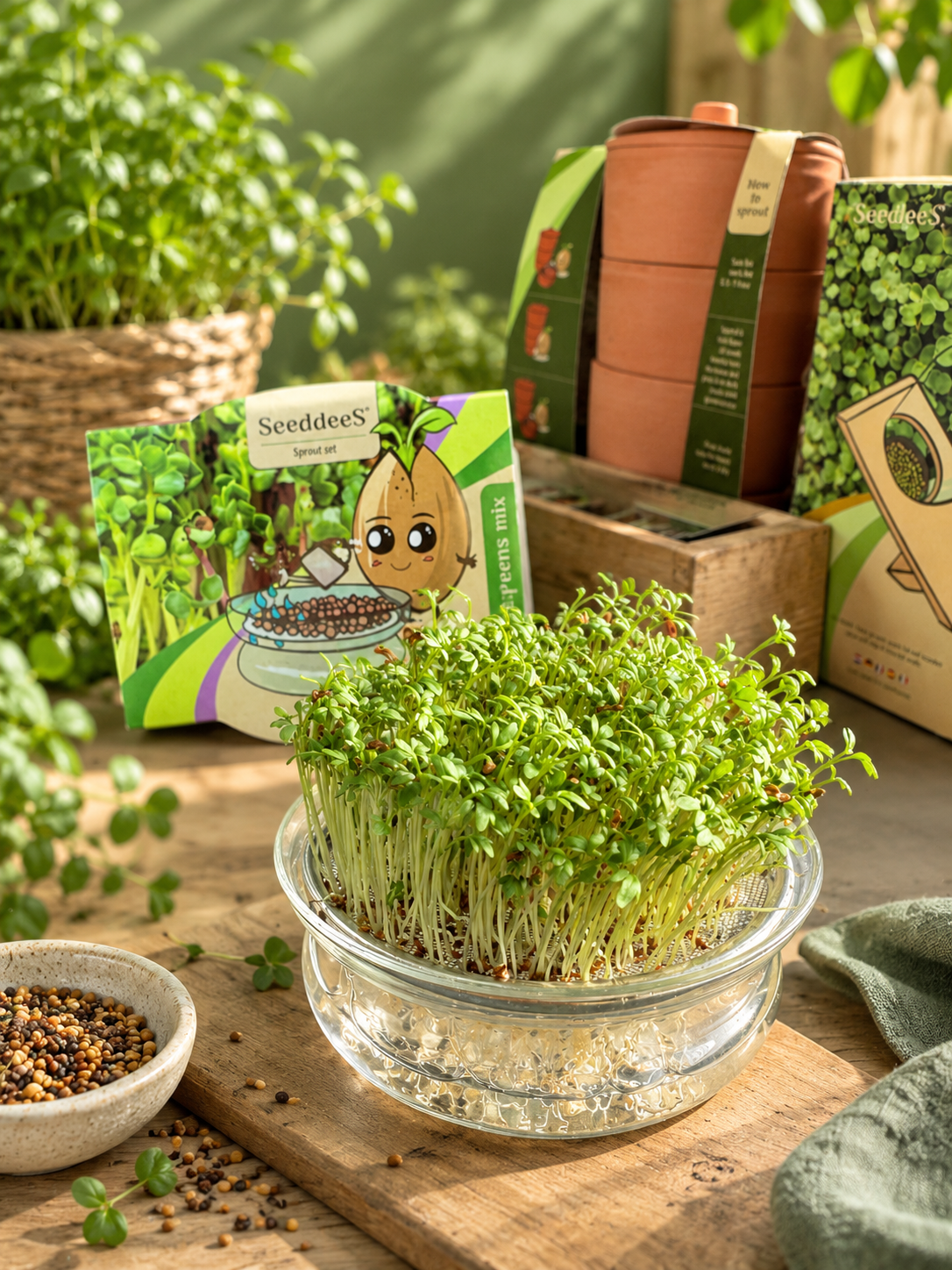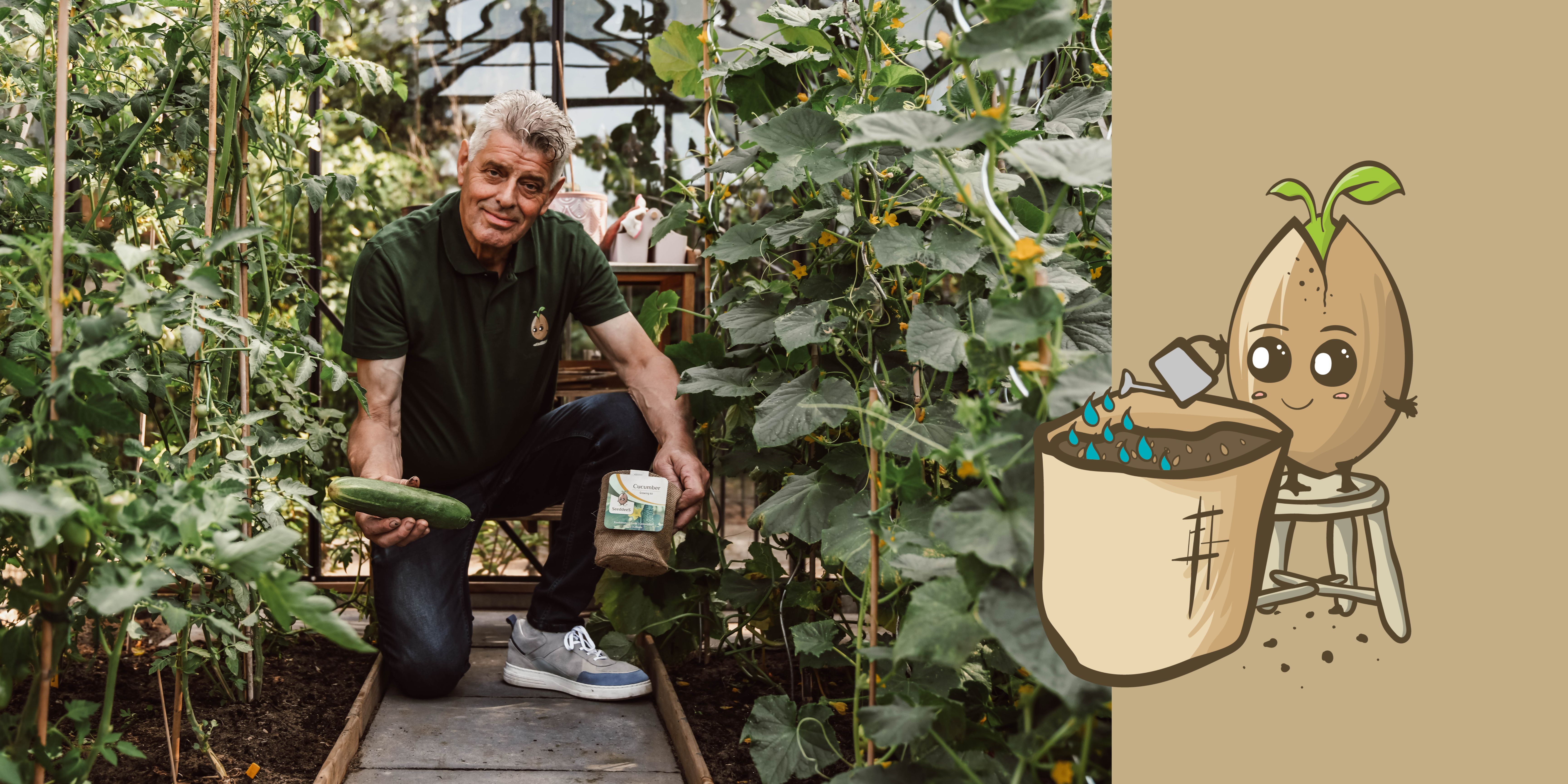
Do you want to harvest from your vegetable garden? Whether it’s in your garden or on your balcony… then starting seeds indoors is the perfect beginning.
What do you need for pre-sowing? A windowsill, sunlight and water. Not complicated at all, as you can see 😉. By pre-sowing seeds indoors, the young plants grow stronger before you transplant them outside. Especially in the Netherlands, this is important for vegetables with a longer growing period, such as aubergine and bell pepper. These vegetables need more time to go from seed to fruit.
When and what to pre-sow?
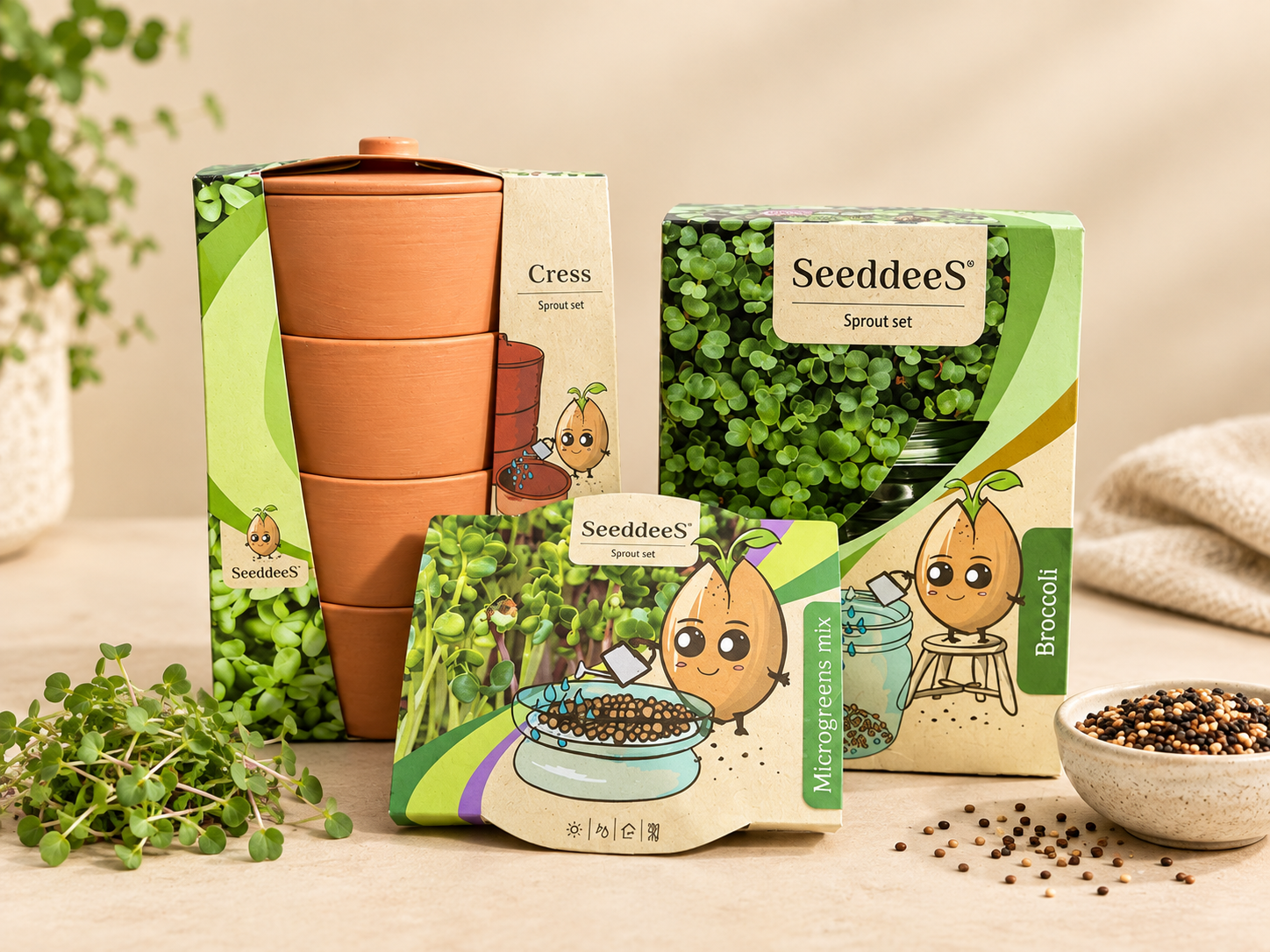
In general, the perfect time to start pre-sowing is late January, February and March. Below you can find a small overview of which seeds are best to pre-sow in the months of February and March and are also available at SeeddeeS®.The nice thing is that everything you need to grow a seed can be found in the SeeddeeS® packaging. Nice and easy, right?
Februari:
· Paprika
· Tomaat
· Aardbei
Maart:
· Wortel
· Munt
The next step after pre-sowing
From the seed, a small plant has now grown — great! But how do you make sure it continues to grow as strong and healthy as possible? And how do you carefully transplant it into your garden or balcony planter after the Ice Saints (mid-May)?
Step 1:
Wait until the last night frost has passed. This is often around the second week of May, when plants are strong enough to go outside. Do not transplant them in full sun, as this can cause them to dry out — which would be a shame after all your effort.
You can also choose to gradually let the plants get used to outdoor conditions by placing them outside a few times before permanently transplanting them.
Step 2:
Garden –
Prepare the spot where you will plant the seedlings. Make sure the soil is loose, free of weeds, and add nutrients if necessary.
Balcony –
Choose a planter with drainage holes at the bottom, or drill them yourself. Optionally place clay pebbles (hydro pellets) at the bottom and fill the pot with fresh soil. There are different types of potting soil available, so choose the one that best suits what you are planting.
Step 3:
Remove the seedlings from the pot by gently squeezing the pot. This makes it easier to grab the plant by the root ball. Be careful: never hold the plant by the stem!
Step 4:
Dig a hole slightly larger than the root ball in the garden, greenhouse or planter. Keep the same planting depth as in the pot and place the plant in the soil. Gently press the soil down. Leave 15 to 30 cm of space between plants, depending on the type of plant. Water after planting, but do not let the plant “drown.”
Extra tips from SeeddeeS®
• Place tall plants such as tomato, bell pepper and aubergine next to a stake immediately for extra support.
• Herbs such as basil love warmth and sunlight, so always place them in a sunny spot.
• Both carrot and strawberry tolerate sun well and prefer at least 6 hours of sunlight.
• Be careful with mint: it can spread aggressively and take up a lot of space. Keep it under control or plant it in a pot.
• Do not place cucumber plants outside if the temperature is below 15°C. If you grow them in a greenhouse, they can often be transplanted from April onwards.
Would you like a handy checklist for pre-sowing indoors? Then read the next blog;