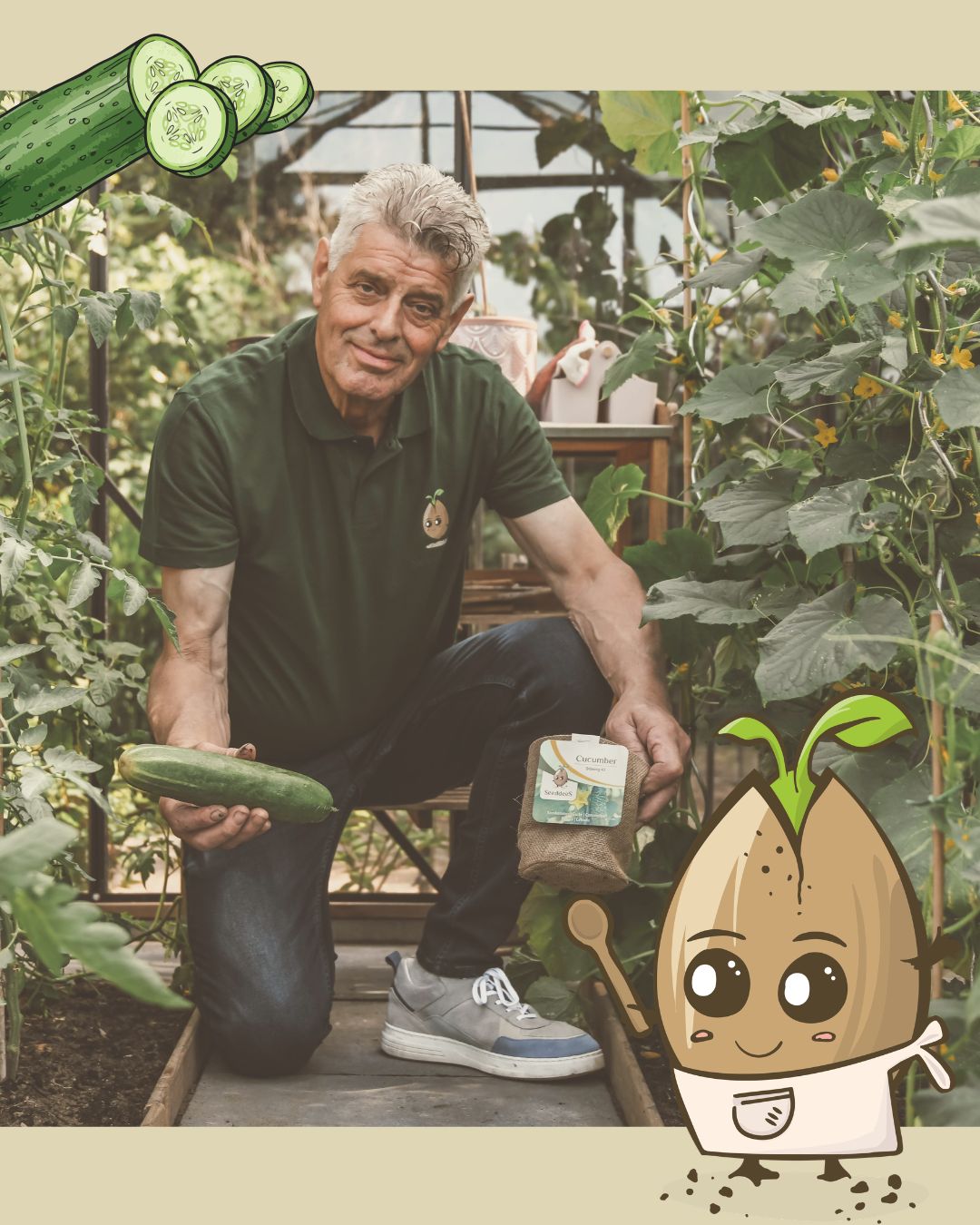
Cucumbers: a delicious snack for in between meals or in salads, for example a snack that has been a weekly staple in kitchens for decades. The plant you’ve grown with SeeddeeS® is coming up, but what next? Read the handy tips below so you can harvest plenty of delicious cucumbers this summer. Let’s go!
Transplanting cucumbers into the ground, how do I do this?
In mid-May, the seedlings can officially be moved outdoors, after the last frost. This means that the freezing temperatures are over and the plants can no longer be damaged. It’s a shame, of course, if you’ve put a fair bit of effort into that little plant and it doesn’t survive the frost. Because, as they say, ‘April does as it pleases’ 😉.
Follow these steps when transplanting:
- Step 1: Always plant the seedlings in rich soil, preferably in a greenhouse for the warmth.
- Step 2: Consider adding some compost to the soil.
- Step 3: Make a small hole and space them 50 cm apart in a row so the plants have enough room to grow.
- Step 4: Place the plants into the holes you have made and press them down gently so that they are firmly in place.
- Step 5: Water the plants a little afterwards, but be careful to water around the plant rather than directly onto it, as they are still fragile.
- Step 6: You can choose to place bamboo canes next to the plant or use stakes and netting to provide support. The plants can grow upwards along these so that they can grow tall and sturdy.
How to do this: drive 1.50-metre stakes into the ground in a row, leaving a metre’s gap between them. Decide for yourself how long you want this to be and how much space you have. Take the wire mesh and secure it to the stakes, or use cable ties or string if necessary.
How do you prune cucumbers?
Pruning or trimming cucumbers helps them ripen sooner, as it slightly limits their growth. Remove the side shoots, flowers and small fruits from the bottom 40 cm of the plant. This is important to strengthen the plant and prevent the risk of mould. From around 50 cm, the cucumber plant can be left to grow freely and produce healthy cucumbers. Allow the side shoots to grow for a while; when they become long, prune them back as well. So, let the main stem continue to grow and tie it up higher and higher as it grows. Prune side shoots back to a maximum of 4 leaves with a stem. Also, keep a close eye on the plant to ensure there are no yellow or damaged leaves.
When to harvest a cucumber plant
Cucumbers are usually ripe and ready for harvesting around July. This also depends on whether you’re growing them in the open ground or in a greenhouse. Above all, don’t wait until the cucumber turns too yellow. If a cucumber is too yellow, it tastes very bitter, and of course you don’t want that. Once the plants have finished flowering, usually around October, remove them from the ground. It is best not to put them on the compost heap as they often carry diseases by the end of the season. Common problems with cucumber plants include mildew, mites and aphids.
Making a cucumber salad with SeeddeeS®
With the tips above, your cucumber plant should thrive! Then use it to make a delicious cucumber salad:
What do you need?
- 1 cucumber
- 150 ml Greek yoghurt
- 1 clove of garlic
- Fresh dill and parsley
- Red onion
- Salt and pepper
Wash the cucumber and slice it thinly, add the yoghurt and crush the garlic using a garlic press. Finely chop the fresh dill and parsley and combine everything in a bowl. Add salt and pepper and mix well. Garnish with red onion rings and a squeeze of lemon juice, if desired. Voilà, a delicious fresh cucumber salad made from your own home-grown cucumber!
SeeddeeS
.jpg "An insect hotel in the garden: why it’s so important for biodiversity")